Where Cambridge basements rely on pumps
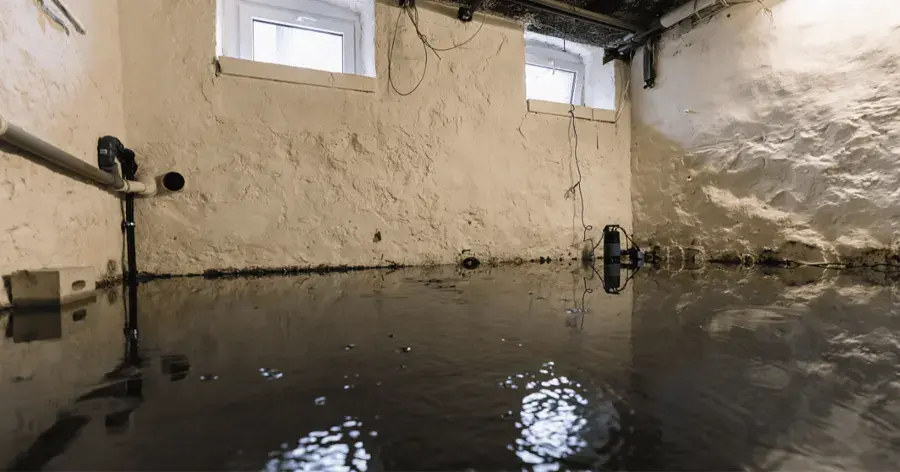
A pump pit is not standard in every Cambridge basement, but it is common where the water table is high. East Cambridge and Kendall Square are built largely on filled former marsh, North Cambridge near Alewife Brook and Fresh Pond sees ground water rise after long rains, and many garden-level condo conversions added a pit and pump when the basement was finished.
- Power outages during the same storms that raise the water table
- Stuck float switches and worn-out pumps
- Pumps that cannot keep up with a long rain
- Frozen or blocked discharge lines in winter
Pumping out and drying
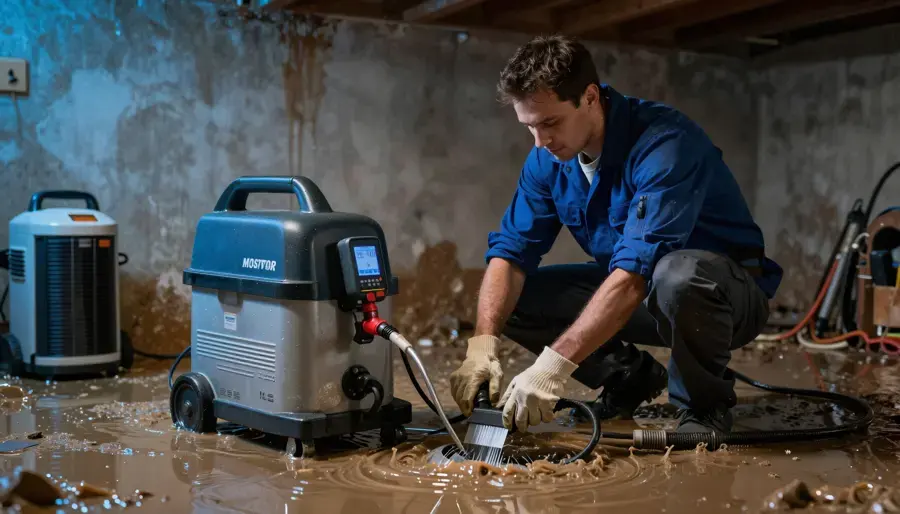
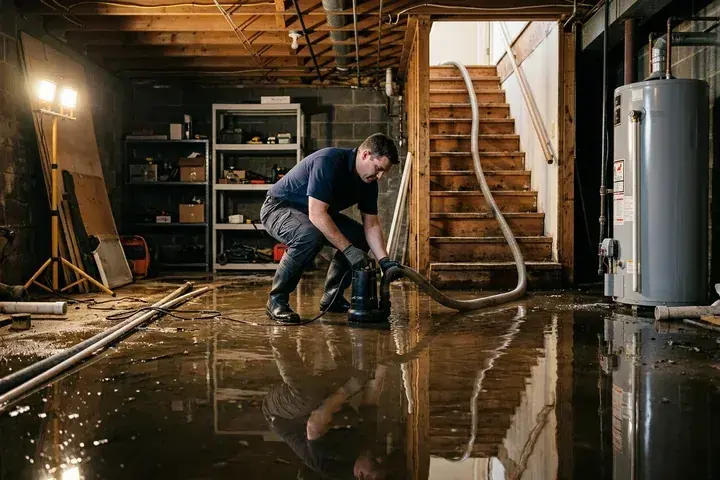
The extraction crew brings submersible pumps for standing water and truck-mounted extraction for carpet and pad. The tech who does the walkthrough maps moisture on walls, framing and slab, and wet carpet pad and lower drywall come out. Basements are cool, so the drying team often uses desiccant dehumidifiers, which keep pulling water out of cold air, and logs readings every day until the goal is met. The basement flooding cleanup page covers stone and brick foundation drying in more detail.
A battery backup or water-powered backup pump keeps the pit working in a power outage, which is exactly when storms push the water table up.
Preventing the next failure
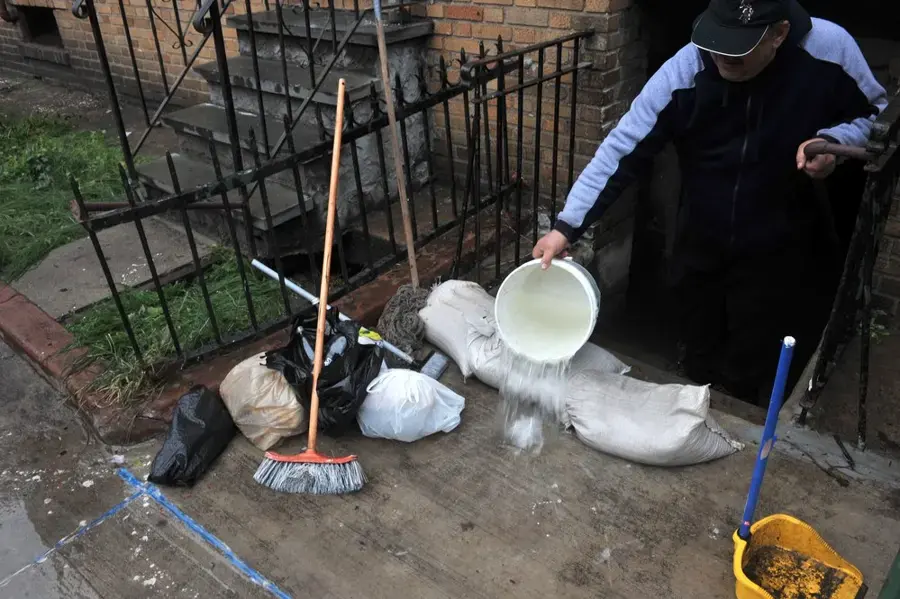
Test the pump each spring and fall by pouring water into the pit, keep the float free of the pit wall, and make sure the discharge line empties well away from the foundation. The Ready.gov power outage page covers storm season preparation, and FEMA flood maps show flood zone status. If storm water also came through the bulkhead, see storm flood cleanup.
- Category. Ground water in a pit is usually Category 2, and Category 3 if it mixed with a floor drain backup.
- Class. Finished basements are often Class 2 to 3.
- Equipment. Submersible pumps, extraction, desiccant or LGR dehumidifiers, air movers.
- Goal. Framing and slab within 2 to 4 points of a dry reference.