Plaster, hardwood and old framing

Structural Drying in Cambridge, MA

Surface dry is not dry. The drying team maps moisture inside walls, floors and ceilings, sizes air movers and dehumidifiers to each room and keeps the equipment running until the readings match a dry reference.

(888) 629-3140Get the structural drying started
24/7 dispatch Dried to IICRC S500 Daily moisture readings
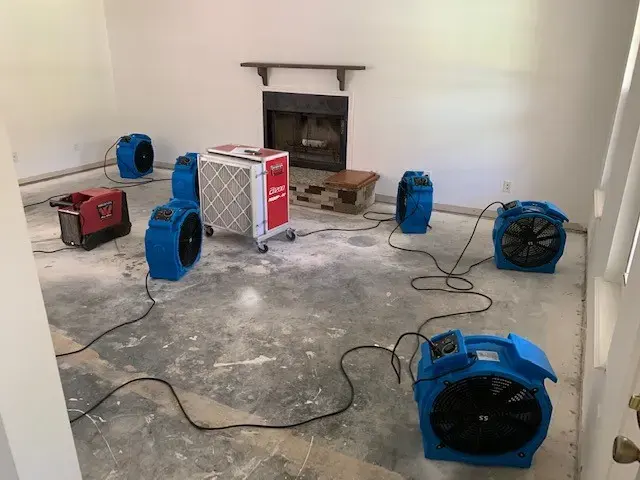
Air movers, a dehumidifier and an air scrubber drying a room down to the subfloor
Right now

What to do the moment you find wet walls and floors

  1. 1

    Get the water out first

    Standing water has to be extracted before drying equipment can work.

  2. 2

    Open the windows only if it is dry outside

    On humid or rainy days, open windows slow the drying. Keep them closed once dehumidifiers run.

  3. 3

    Leave the equipment on

    Air movers and dehumidifiers run around the clock. Turning them off at night adds days.

  4. 4

    Keep a note of changes

    Tell the drying team about new stains, smells or warped boards between visits.

How the work is held to standard

How structural drying is handled in Cambridge

Rapid local response

Cambridge water damage pros dispatch around the clock, because water keeps moving through plaster and floor cavities overnight.

IICRC S500 drying standard

The drying team works to IICRC S500: structural drying, not just surface drying, verified with meters.

Claim-ready documentation

A moisture map, daily readings and timestamped photos go into the file your insurer reviews.

Cambridge water experts

Triple-deckers, rowhouses, radiators and fieldstone basements are everyday work in this city.

Typical cost ranges

What does structural drying cost in Cambridge, MA?

In Cambridge, MA, structural drying typically runs $1,200 to $8,000, depending on how many rooms are wet, the material class and how long the equipment has to run. Plaster, old hardwood and masonry take longer and cost more to dry than drywall and carpet.

One or two rooms

$1,200 to $3,000
  • Air movers and one dehumidifier
  • Daily readings
  • Moisture map

Floor or several rooms

$3,000 to $5,500
  • Hardwood drying mats
  • Cavity drying
  • LGR dehumidifiers

Whole level, dense materials

$5,500 to $8,000+
  • Desiccant dehumidification
  • Heat drying as needed
  • Full drying logs

The drivers are the water category, the square footage that got wet, the material class (drywall and carpet versus plaster, hardwood and fieldstone) and how fast drying started. For a planning number, try the Cambridge water damage cost calculator.

The dry-out, step by step

The structural drying process in Cambridge

The order of the work is what separates a finished dry-out from a cosmetic one.

  1. 1

    Map the moisture

    The tech who does the walkthrough traces the source and maps wet plaster, framing and floors with thermal imaging and pinless meters before any equipment goes down.

  2. 2

    Extract

    The extraction crew pulls standing water with truck-mounted or portable extraction, so the water leaves the building instead of running into the unit below.

  3. 3

    Set the drying

    The drying team sizes air movers to each room's evaporation load and runs LGR dehumidifiers, with desiccants for dense materials.

  4. 4

    Read it daily

    Moisture and psychrometric readings go into the drying log every day, and equipment moves to whatever is still wet.

  5. 5

    Verify and document

    Equipment comes out when the wet material sits within 2 to 4 points of a dry reference, and the logs go into the claim file.

What structural drying means

Structural drying dries the building itself: framing, subfloor, plaster, hardwood and masonry, not just the surfaces you can touch. IICRC S500 is the industry drying standard, and it starts with a moisture map. The tech who does the walkthrough reads the wet materials with pinless and pin meters and thermal imaging, and takes a reading from the same material in a dry part of the building. That dry reference is the goal.

  • Air movers sized to each room's evaporation load
  • LGR dehumidifiers to pull the moisture back out of the air
  • Desiccant dehumidifiers for dense materials and cold spaces
  • Cavity drying through small access holes

Why Cambridge buildings dry differently

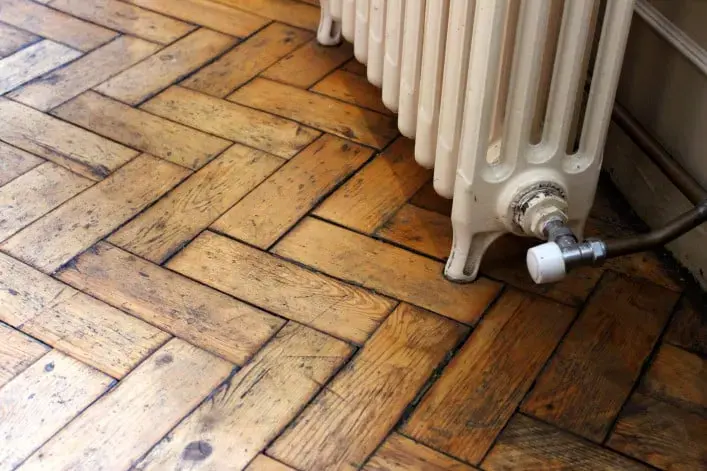
Plaster and lath holds more water than drywall and gives it up slowly. Old-growth oak and pine floors cup when they get wet and need slow, measured drying to flatten. Balloon framing lets water run down inside a wall between floors, and fieldstone and brick foundations stay damp in cool basements. The drying team plans for each of these: floor drying mats on hardwood, air pushed into cavities, desiccants or added heat in cold basements, and daily readings on each material.

The equipment stays until the readings say dry, not until it looks dry. Plaster can feel dry on the surface while the lath behind it is still wet.

Readings, logs and the claim file

Every day, the drying team records moisture readings on the marked spots and the temperature and humidity in each room and outside. Those psychrometric logs show the drying is working and go into the claim file with the moisture map and photos. When a reading stalls, equipment moves or more comes in. Drying usually takes three to five days for a contained loss and longer for plaster, hardwood and masonry. The EPA mold cleanup page explains the 24 to 48 hour window, and the Department of Energy insulation page covers what goes back in the walls. See water extraction for the step that comes first.

  • Standard. IICRC S500 is the industry drying standard.
  • Class. Class 1 through 4 sets how much equipment a room needs; plaster and hardwood are Class 4 materials.
  • Equipment. Air movers set to the evaporation load, LGR dehumidifiers, desiccants for dense or cold materials.
  • Goal. Within 2 to 4 points of a dry reference material in the same building.
Questions

Structural Drying questions in Cambridge, MA

What is the drying goal?

Wet materials are dried to within 2 to 4 points of a dry reference: the same material in an unaffected part of the same building.

Why not just use fans?

Fans move air but do not remove moisture from it. Without dehumidifiers the water just moves into the air and back into other materials.

Can plaster walls be dried in place?

Often, if they were wet with clean water and are still firmly attached. Plaster dries slowly, so readings decide when it is done.

How long does structural drying take?

A contained Class 1 or 2 loss usually dries in three to five days. Plaster, old hardwood and masonry take longer.

Why does the equipment make the house warm?

Dehumidifiers and air movers give off heat, and warm air carries moisture away faster. Some jobs add heat on purpose.

Is drying documented for insurance?

Yes. Daily moisture readings, psychrometric logs, a moisture map and photos make up the drying record in the claim file.

Service area

Structural drying across Cambridge and next door

Cambridge, MA, from the Charles River to Alewife Brook

The Cambridge restoration crew handles structural drying in every Cambridge ZIP code: 02138, 02139, 02140, 02141, 02142 and 02238, from East Cambridge to North Cambridge.

The same crews work Somerville, Arlington, Belmont, Watertown, Allston and Brighton.

See every Cambridge neighborhood and ZIP

Emergency water removal

Wet walls or floors in Cambridge? Call now.

Moisture mapping, air movers, dehumidifiers and daily readings to the drying goal.

(888) 629-3140Set up the structural drying now
Call (888) 629-3140 24/7 dispatch