Why radiator leaks are a Cambridge problem
A large share of Cambridge homes, from Mid-Cambridge Victorians to North Cambridge triple-deckers, still run on steam or hot-water heat with cast-iron radiators. These systems work for generations, but the parts wear. Steam air vents spit water when they fail, valve packing starts to weep, supply pipes corrode where they pass through the floor, and a boiler's relief valve can discharge onto the basement floor.
- Radiator valves and air vents leaking onto the floor
- Corroded supply and return pipes between floors
- Boiler relief valve and fill valve failures
- Cracked radiator sections after a freeze in an unheated room
Saving old hardwood
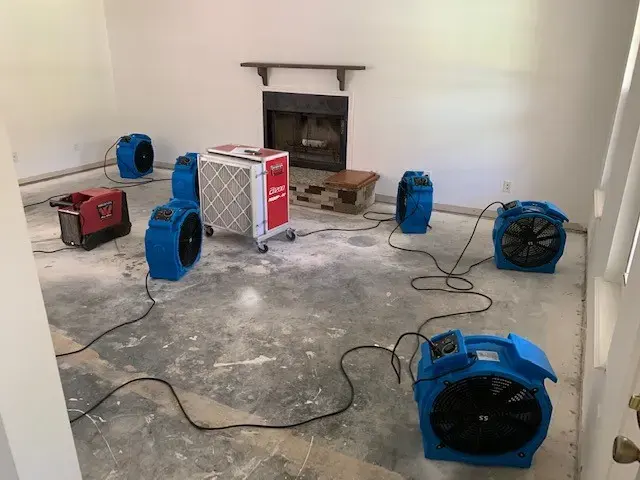
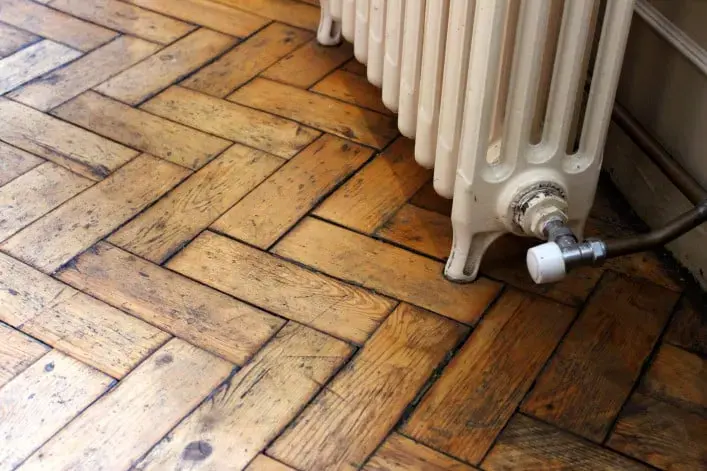
The water from a radiator leak usually lands on strip oak or old-growth pine, often right at the edge of a room. Slow leaks leave black stains where the water reacts with the tannins in the wood, and bigger leaks make the boards cup. The drying team uses floor drying mats that pull water up through the boards, along with air movers and LGR dehumidifiers, and reads the wood daily. Many floors that cupped flatten back as they dry and can be sanded later, so drying comes before any replacement decision. The structural drying page covers the equipment.
A radiator that hisses and spits water every time the heat comes on usually has a failing air vent. It is a small repair that prevents a stained floor.
Boiler room and ceiling leaks
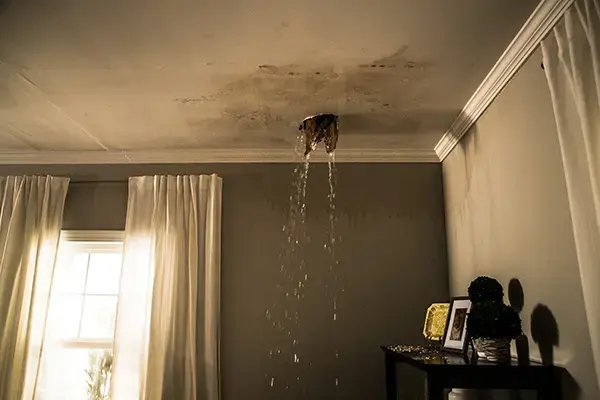
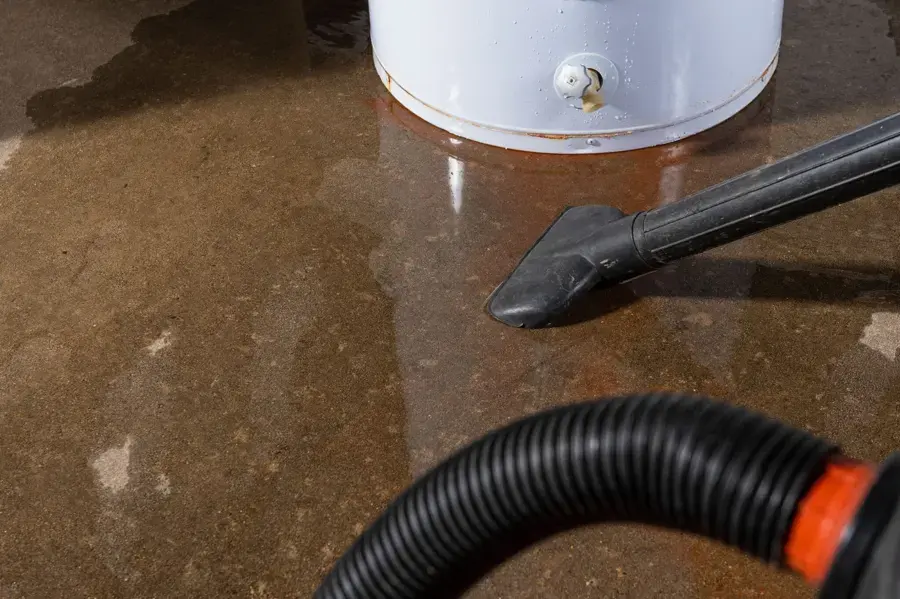
Boiler water that has sat in iron pipes for years is rusty and sometimes treated, so it stains and it is not handled like clean tap water. In the basement, the extraction crew pulls the water and the drying team dries the slab and anything stored nearby. When a heating pipe leaks between floors, the ceiling below is checked the same way as any ceiling leak. The Department of Energy boiler page has maintenance basics, and the EPA mold cleanup page explains why wet floors should be dried quickly.
- Category. Boiler water that sat in iron pipes carries rust and sludge, so crews often handle it as more than clean water.
- Class. Hardwood and plaster are dense, slow-drying materials.
- Equipment. Hardwood floor drying mats, air movers, LGR dehumidifiers and pinless meters.
- Goal. Hardwood and subfloor within 2 to 4 points of a dry reference.