Washers, dishwashers, ice makers

Appliance Leak Water Damage in Cambridge, MA

A burst washer hose or a slow dishwasher leak soaks the floor under the cabinets and, in a stacked building, the ceiling below. The drying team dries under cabinets and floors without tearing out more than the readings require.

(888) 629-3140Get the appliance leak dried out
24/7 dispatch Dried to IICRC S500 Daily moisture readings
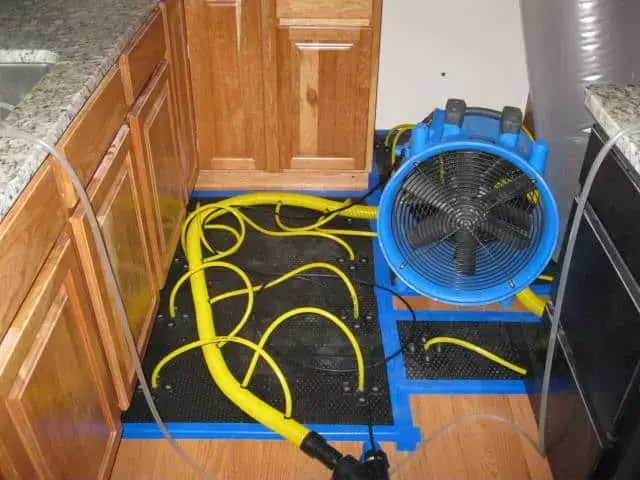
Drying mats and an air mover drying hardwood under kitchen cabinets after a dishwasher leak
Right now

What to do the moment you find an appliance leak

  1. 1

    Shut the appliance valve

    Close the valve behind the washer or under the sink. If there is none, close the main shutoff.

  2. 2

    Unplug if it is dry to reach

    Unplug the appliance only if the plug and floor around it are dry.

  3. 3

    Pull the kick plate

    Remove the dishwasher or cabinet kick plate so you can see how far the water went.

  4. 4

    Tell the unit below and call

    In a stacked building, warn the neighbor below, photograph everything, then call.

How the work is held to standard

How appliance leak water damage is handled in Cambridge

Rapid local response

Cambridge water damage pros dispatch around the clock, because water keeps moving through plaster and floor cavities overnight.

IICRC S500 drying standard

The drying team works to IICRC S500: structural drying, not just surface drying, verified with meters.

Claim-ready documentation

A moisture map, daily readings and timestamped photos go into the file your insurer reviews.

Cambridge water experts

Triple-deckers, rowhouses, radiators and fieldstone basements are everyday work in this city.

Typical cost ranges

What does appliance leak water damage cost in Cambridge, MA?

In Cambridge, MA, appliance leak water damage cleanup typically runs $800 to $6,000. A dishwasher leak caught early sits at the low end; a washer hose that ran for hours through an upstairs unit into the ceiling below sits at the high end.

Caught early, one room

$800 to $2,000
  • Extraction
  • Under-cabinet drying
  • Daily readings

Cabinets and flooring

$2,000 to $4,000
  • Toe kicks and panels opened
  • Subfloor drying
  • Moisture mapping

Unit below affected

$4,000 to $6,000+
  • Two levels dried
  • Ceiling below checked
  • Full documentation

The drivers are the water category, the square footage that got wet, the material class (drywall and carpet versus plaster, hardwood and fieldstone) and how fast drying started. For a planning number, try the Cambridge water damage cost calculator.

The dry-out, step by step

The appliance leak water damage process in Cambridge

The order of the work is what separates a finished dry-out from a cosmetic one.

  1. 1

    Map the moisture

    The tech who does the walkthrough traces the source and maps wet plaster, framing and floors with thermal imaging and pinless meters before any equipment goes down.

  2. 2

    Extract

    The extraction crew pulls standing water with truck-mounted or portable extraction, so the water leaves the building instead of running into the unit below.

  3. 3

    Set the drying

    The drying team sizes air movers to each room's evaporation load and runs LGR dehumidifiers, with desiccants for dense materials.

  4. 4

    Read it daily

    Moisture and psychrometric readings go into the drying log every day, and equipment moves to whatever is still wet.

  5. 5

    Verify and document

    Equipment comes out when the wet material sits within 2 to 4 points of a dry reference, and the logs go into the claim file.

The appliances behind most Cambridge leaks

Stacked washer and dryer units in upstairs closets, dishwashers added during kitchen renovations and refrigerator ice maker lines all live on the upper floors of Cambridge's two- and three-family buildings. When a rubber washer hose bursts or a dishwasher door seal fails, water runs under the cabinets and finds the gaps in the floor.

  • Burst or cracked rubber washing machine hoses
  • Dishwasher door seals, pumps and supply lines
  • Refrigerator ice maker lines crushed behind the fridge
  • Washer drain hoses that slip out of the standpipe

Drying under cabinets without tearing them out

Water under a kitchen or laundry floor is hidden, and it is where mold likes to start. The tech who does the walkthrough uses pinless meters and thermal imaging to find the edge of the wet area, then the drying team removes toe kicks and drills small holes in cabinet bases to push dry air underneath. Floor drying mats pull water out of hardwood. Cabinets usually stay unless they are particle board that swelled. The structural drying page covers the equipment.

Braided stainless washer hoses and an automatic leak shutoff valve cost little next to a ceiling repair in the unit below.

When it reaches the unit below

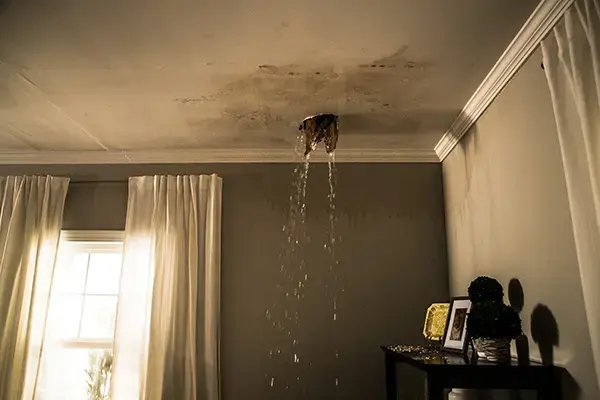
An appliance leak in a condo building is usually a two-unit job, handled like any ceiling leak. The photos and drying logs go to both owners and the association. The EPA WaterSense leak page has simple checks for appliance lines, and the EPA mold cleanup page explains why hidden wet areas under cabinets need drying, not just a towel.

  • Category. Supply hose water is Category 1; washer drain water and dishwasher water are Category 2.
  • Class. Water under cabinets and in subfloor is often Class 2 to 3.
  • Equipment. Cabinet toe kick drying, floor drying mats, air movers, LGR dehumidifiers.
  • Goal. Subfloor and cabinet bases within 2 to 4 points of a dry reference.
Questions

Appliance Leak Water Damage questions in Cambridge, MA

How often should washer hoses be replaced?

Rubber hoses are often replaced every five years or so. Braided stainless hoses last longer and are less likely to burst.

Do the kitchen cabinets have to come out?

Usually not. Toe kicks come off and dry air is pushed under the cabinet bases. Particle board cabinets that swelled may need replacing.

Is appliance leak damage covered by insurance?

Sudden leaks are often covered, while slow leaks over weeks may not be. Coverage depends on your policy, so it is worth checking with your own insurer.

How long does drying take after a dishwasher leak?

Usually three to five days. Hardwood and subfloor under cabinets can take longer, and equipment stays until the readings reach the goal.

Why does the floor smell musty after a small leak?

Water trapped under flooring or cabinets that never dried can start microbial growth. Meters find the wet area so it can be dried properly.

What if my washer leaked into the apartment below?

Both units are dried together. Tell the neighbor and the association right away, and keep the photos and drying logs for both insurers.

Service area

Appliance leak water damage across Cambridge and next door

Cambridge, MA, from the Charles River to Alewife Brook

The Cambridge restoration crew handles appliance leak water damage in every Cambridge ZIP code: 02138, 02139, 02140, 02141, 02142 and 02238, from East Cambridge to North Cambridge.

The same crews work Somerville, Arlington, Belmont, Watertown, Allston and Brighton.

See every Cambridge neighborhood and ZIP

Emergency water removal

An appliance leak in Cambridge? Call now.

Under-cabinet, floor and ceiling drying for washer, dishwasher and ice maker leaks.

(888) 629-3140Get the drying started today
Call (888) 629-3140 24/7 dispatch