Where Cambridge pipes freeze
Cambridge winters bring stretches of single-digit nights, and older buildings have plenty of cold spots. Triple-deckers often run kitchen and bath lines along exterior walls and through enclosed back porches that were never insulated. Basements with bulkhead doors let cold air in around the entry, and outdoor spigots that were not shut off inside can split at the valve.
- Kitchen sink lines on exterior walls
- Pipes in enclosed rear porches and stairwells
- Lines near bulkhead doors and basement windows
- Units left cold over winter break with the heat turned down
That last one is a Cambridge pattern. Students and residents who travel in December and January sometimes turn the heat low in an empty unit, and a split line can run for days before anyone notices the ceiling downstairs.
What happens when the pipe thaws
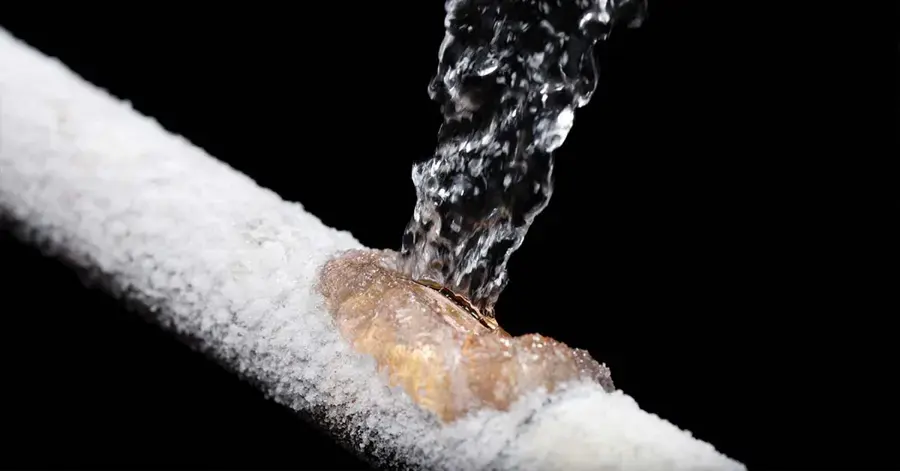
Ice expands and splits the pipe, but the ice also plugs the split. The leak starts when the line thaws, often a day or two after the cold snap, and usually inside a wall. The tech who does the walkthrough uses thermal imaging to trace the wet path, the extraction crew pulls standing water, and wet insulation in the exterior wall comes out because it will not dry in place. The same method is used for any burst pipe.
If you are away for more than a day in winter, leave the heat at a steady setting and ask someone to check the unit. A shut main helps too.
Drying cold walls
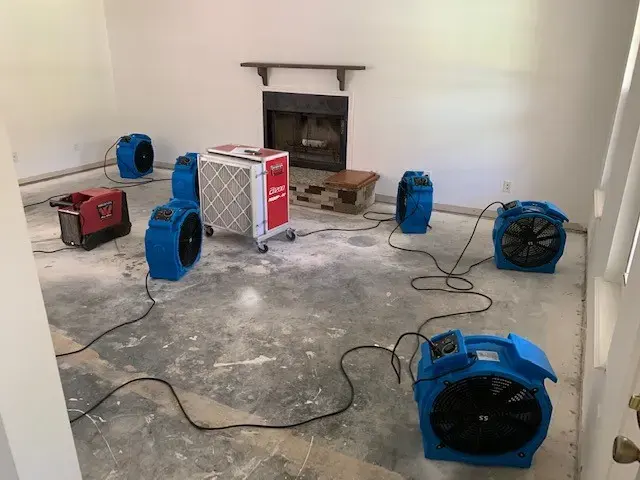
Drying an exterior wall in January is slow work because cold air holds little moisture. The drying team often adds heat, uses LGR or desiccant dehumidifiers that keep working in cool air, and pushes air into the cavity through small access holes. Readings are logged daily until the framing reaches the goal. See structural drying for the details, the Ready.gov winter weather page for freeze prevention and the National Weather Service cold safety page for cold snap warnings.
- Category. Category 1 when the line is a clean supply line and drying starts quickly.
- Class. Class 2 to 3 when an exterior wall cavity and the floor below are wet.
- Equipment. Thermal imaging, wall cavity drying, air movers, LGR dehumidifiers, heat where needed.
- Goal. Framing and sheathing within 2 to 4 points of a dry reference.